

Article: What “Clean Ingredients” Actually Mean in a Protein Bar (and Why It Matters)

What “Clean Ingredients” Actually Mean in a Protein Bar (and Why It Matters)
Walk down any grocery aisle, and you’ll see dozens of protein bars claiming to be clean, natural, or better for you. But here’s the truth: “clean ingredients” isn’t a regulated term. Brands can use it freely, whether their bars deserve the label or not.
So, what does clean ingredients actually mean in a protein bar? And more importantly, how do you know if a protein bar is truly clean—or just marketed that way?
Let’s break it down.
What Does “Clean Ingredients” Mean in Protein Bars?
At its core, a clean protein bar is made with simple, minimally processed ingredients you can recognize and understand, without relying on artificial additives to improve taste, texture, or shelf life.
While there’s no legal definition, most nutrition-forward brands and dietitians agree that clean ingredient protein bars generally focus on:
-
Short, transparent ingredient lists
-
Whole-food or close-to-whole-food ingredients
-
Minimal processing
-
No artificial sweeteners, flavors, or preservatives
Clean doesn’t mean “perfect” or “only whole foods.” It means intentional choices that prioritize quality over shortcuts.
Why “Clean Ingredients” Matter in a Protein Bar
Protein bars sit at an interesting intersection: they’re convenient, but they’re also highly processed by default. The difference between a clean protein bar and a conventional one often comes down to how much processing and what’s added along the way.
Here’s why that matters.
1. Digestive Health
Many conventional protein bars rely on:
-
Sugar alcohols (like maltitol or sorbitol)
-
Artificial fibers
-
Emulsifiers and gums
These ingredients can cause bloating, gas, and stomach discomfort — especially when eaten regularly.
Protein bars with clean ingredients tend to be easier on digestion because they avoid many of these fillers.
2. Blood Sugar & Energy Levels
Clean ingredient protein bars usually:
-
Use natural sweeteners in moderation
-
Pair protein with fiber and fats
-
Avoid high-glycemic syrups
That combination supports more stable energy instead of the spike-and-crash cycle caused by refined sugars or ultra-processed carbs.
3. Ingredient Transparency & Trust
If you can’t pronounce half the ingredient list, it’s hard to trust what you’re eating.
Clean protein bars are designed so you can:
-
Recognize most ingredients
-
Understand why each ingredient is included
-
Feel confident eating them consistently
That trust matters, especially if protein bars are part of your daily routine.
Are Clean Protein Bars Healthier?
Generally, yes — but context matters.
Clean protein bars aren’t automatically “healthy,” but they tend to be healthier than conventional bars because they:
-
Contain fewer artificial additives
-
Use higher-quality protein sources
-
Avoid excessive sweeteners
-
Are easier to digest for many people
That said, portion size, protein quality, and overall diet still matter. A clean protein bar works best as a complement to real meals, not a replacement for them.
What Ingredients Should You Avoid in Protein Bars?
If you’re trying to choose a truly clean protein bar, these are the most common red flags.
Artificial Sweeteners
Often added to reduce sugar without sacrificing sweetness, but they can impact digestion and taste over time.
Common examples:
-
Sucralose
-
Aspartame
-
Acesulfame potassium (Ace-K)
Sugar Alcohols
Marketed as “low sugar,” but notorious for digestive issues.
Watch for:
-
Maltitol
-
Sorbitol
-
Xylitol (especially in large amounts)
Highly Refined Seed Oils
Used to improve texture or shelf life, but heavily processed.
Examples:
-
Soybean oil
-
Canola oil
-
Corn oil
Artificial Flavors & Preservatives
These don’t add nutritional value, only shelf stability or taste manipulation.
If you see vague terms like:
-
“Natural flavors” (without explanation)
-
Artificial flavoring agents
…it’s worth taking a closer look.
What Ingredients Should Clean Protein Bars Include?
Clean ingredient protein bars typically rely on a short list of functional ingredients, such as:
-
High-quality protein sources
-
Natural sweeteners are used sparingly
-
Whole-food fats like nuts or nut butters
-
Fiber from real food sources, not synthetic additives
The goal isn’t perfection, it’s balance, transparency, and repeatability.
How Do You Know If a Protein Bar Is Clean?
Here’s a simple checklist you can use in under 30 seconds:
-
Read the ingredient list first — not the front label
-
Look for roughly 10–12 ingredients or fewer
-
Make sure you recognize most ingredients
-
Avoid artificial sweeteners and sugar alcohols
-
Ask: Does every ingredient serve a clear purpose?
If a bar passes those tests, it’s likely a clean protein bar regardless of the marketing claims.
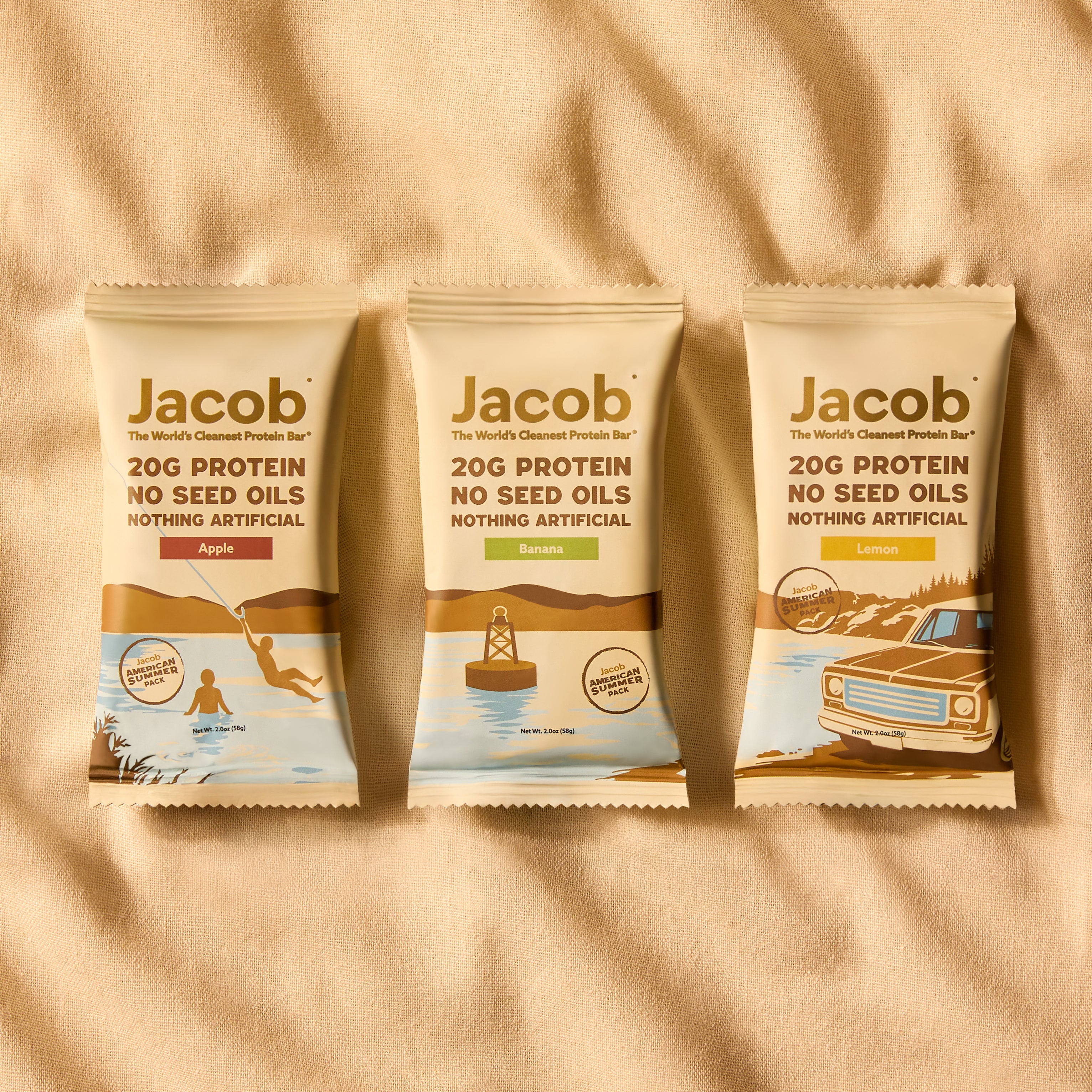
Why Choose a Jacob Protein Bar?
Knowing what clean ingredients should look like is one thing. Finding a protein bar that actually meets that standard is another.
Jacob protein bars are built around a simple principle: use only what’s necessary, and make every ingredient earn its place.
Clean Ingredients, Clearly Defined
Jacob bars focus on:
-
Short, transparent ingredient lists
-
No artificial sweeteners or sugar alcohols
-
No unnecessary fillers or preservatives
Every ingredient is included for a functional reason, not to mask poor formulation or inflate nutrition claims.
High-Quality Protein Without Digestive Tradeoffs
Many protein bars boost protein content by using ingredients that can be tough on digestion. Jacob prioritizes protein sources that are easier on the gut, making the bars more comfortable to eat consistently—not just once in a while.
Naturally Balanced for Real-World Energy
Instead of overengineering macros or relying on excessive sweetness, Jacob protein bars are designed to:
-
Deliver steady energy
-
Support satiety
-
Fit into real, busy schedules
That makes them a practical option for mornings, workouts, or afternoons without the crash common in ultra-processed bars.
Made for People Who Read Labels
If you’re the kind of person who flips the bar over and checks the ingredient list first, Jacob was made for you. The formulation aligns with what people actually mean when they say they want protein bars with clean ingredients, not just what brands claim on the front of the package.
The Bottom Line on Clean-Ingredient Protein Bars
“Clean ingredients” isn’t just a buzzword — it’s a standard you can verify yourself.
The best clean protein bars are:
-
Thoughtfully formulated
-
Transparent about what’s inside
-
Designed for regular, real-life consumption
When you understand what clean actually means, choosing a protein bar becomes simpler, and finding one you can feel good eating every day becomes much easier.
Frequently Asked Questions About Clean Protein Bars
What does clean ingredients mean in protein bars?
In protein bars, clean ingredients generally mean simple, minimally processed ingredients that are easy to recognize. While not a regulated term, clean ingredient protein bars typically avoid artificial sweeteners, sugar alcohols, artificial flavors, and unnecessary preservatives.
Are clean protein bars healthier?
Clean protein bars are often healthier than conventional options because they contain fewer artificial additives, use higher-quality ingredients, and are easier for many people to digest. They’re best used as a convenient supplement to meals, not a replacement for whole foods.
What ingredients should you avoid in protein bars?
It’s best to avoid protein bars with artificial sweeteners, sugar alcohols like maltitol, highly refined seed oils, and artificial flavors or preservatives. These ingredients are commonly added to improve taste or shelf life, but don’t add nutritional value.
How do you know if a protein bar is clean?
To tell if a protein bar is clean, read the ingredient list first. Look for a short list of recognizable ingredients, avoid artificial sweeteners and sugar alcohols, and make sure each ingredient serves a clear, functional purpose.

Written by Jake Levy

